

Boards Track Work. Visuals Build Understanding
Project management boards are extremely effective at structuring and tracking work, but they consistently fall short when it comes to creating real human understanding and intent.
Misunderstandings don’t always stem from missing data; they come from missing context. And often, the conversation that could have resolved the misunderstanding never happens at all. Instead of communicating directly, teams talk through the board. Exchanging machine‑readable updates rather than engaging in human‑to‑human dialogue.
I’ve been part of teams that fail not because their boards were inaccurate, but because they were incomplete — missing that layer of shared interpretation and empathy that turns information into insight. The data was correct; the understanding was not.
Instead of discussing decisions, teams find themselves explaining the interface. You’ll hear it in meetings:
“This item relates to that one…”
“Scroll down a bit…”
“Open that dependency…”
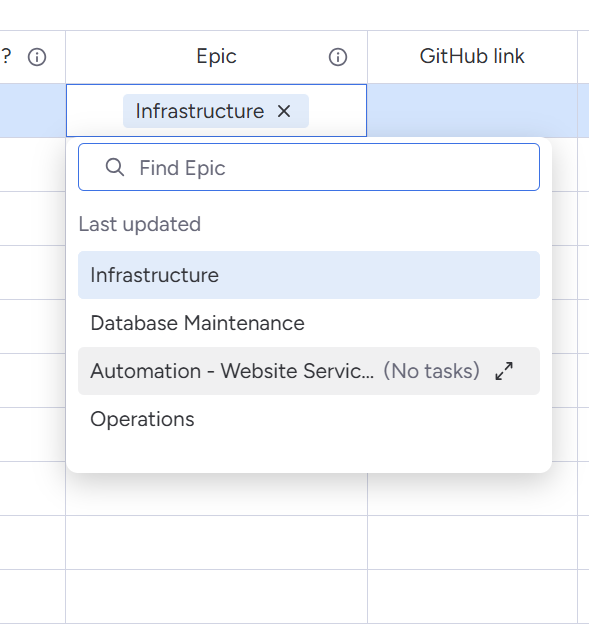
These aren’t strategy conversations; they’re navigation sessions. What should be moments of clarity and connection become time spent interpreting a system instead of each other.
Where Boards Fall Short for Human Alignment
In many ways, boards are the database layer of project management. They structure work into fields, statuses, and relationships that a system can easily store, query, and automate. This makes them invaluable for scale.
But just as a database is never the full application, boards are never the full experience of teamwork. They capture the what and the how much, but rarely the why or what next. Databases optimize for consistency and retrieval — not for comprehension or empathy. Boards make work machine-readable, not human-readable.
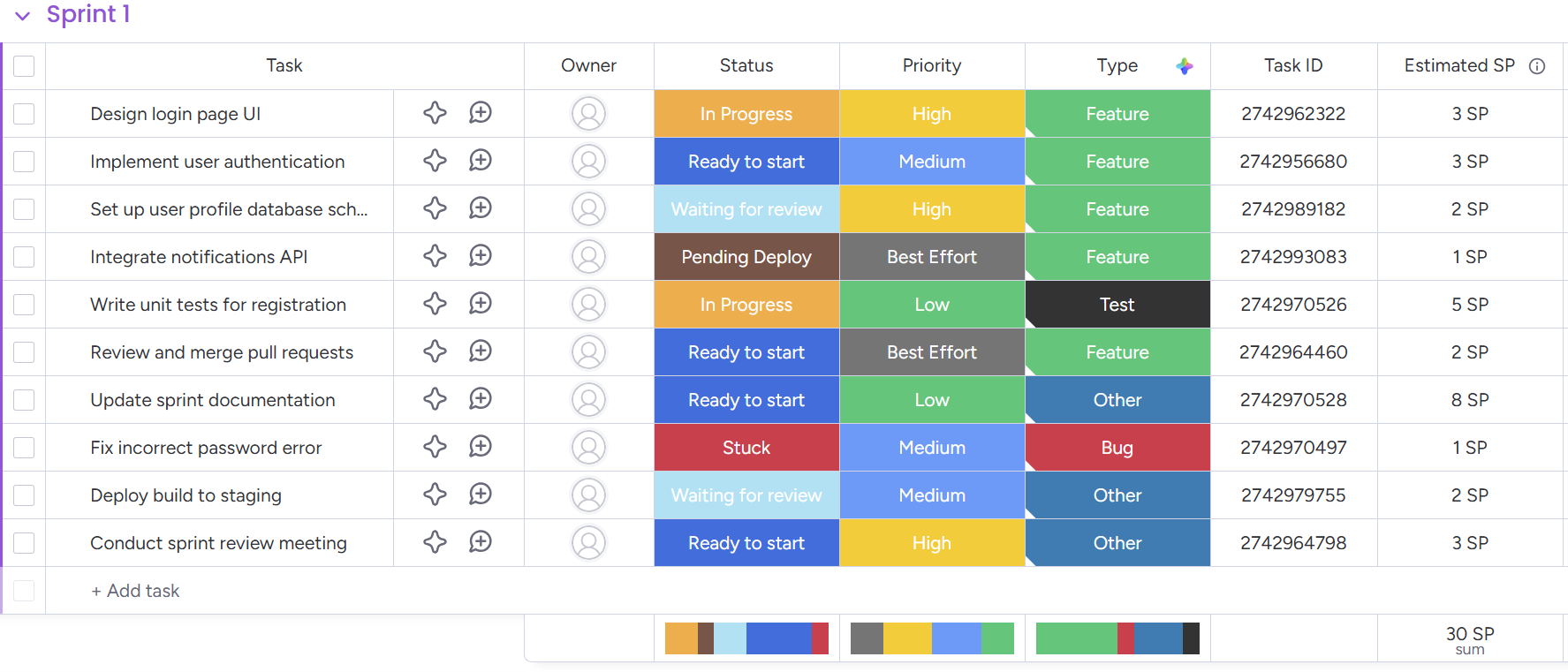
And that’s fine, as long as we recognize it. The very structure that makes boards powerful for machines can constrain human understanding. We expect our tools to build alignment for us when alignment is, at its core, a human process.
Visual Collaboration vs. Board‑Only Workflows
I’ve seen this contrast clearly in two organizations — and it changed how I think about agile in practice.
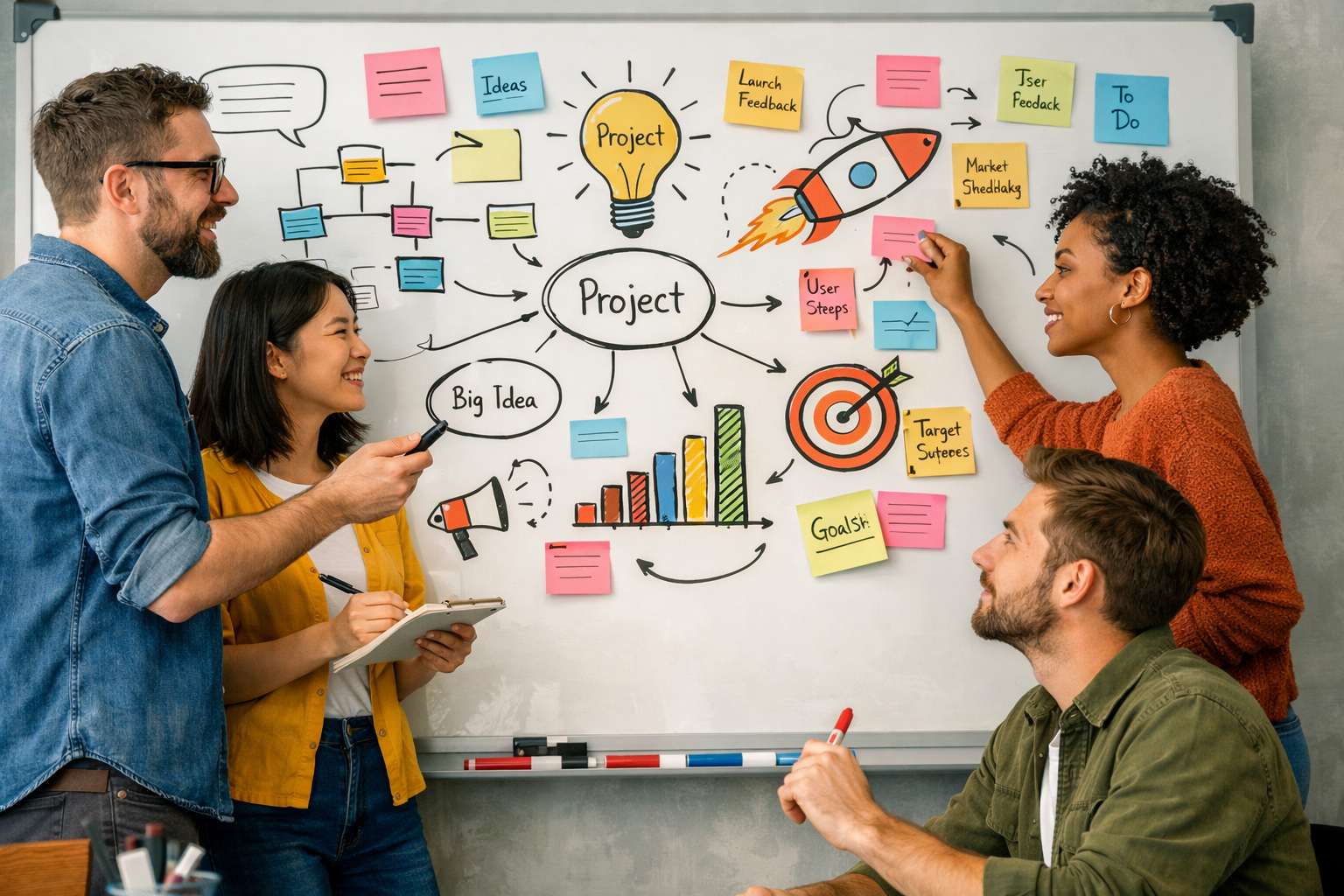
In Company A, Scrum was introduced as something genuinely new. Everyone accepted that we didn’t have all the answers and that we would learn by doing. The digital tracking system existed, but only the project manager touched it regularly. The team worked in a highly visual environment: whiteboards, sticky notes, and real planning poker cards.
We stood around the board together, moved work with our hands, and saw blockers and priorities in the same shared space. Conversation and alignment happened in front of a shared, visual board, where everyone could literally see and move the work together, which made understanding and communication feel natural. We “failed” a lot of sprints, but each one taught us something about capacity, scope, and collaboration.
In Company B, the team’s collaboration happened almost entirely inside the project management tool. Every interaction with the work was mediated through boards, fields, and status changes. What used to be shared moments of discussion gradually turned into asynchronous updates: estimates entered alone, comments added to tickets, notes buried in activity logs.
Over time, the board became the primary place where “communication” occurred. Questions, clarifications, and decisions were scattered across items and threads instead of surfaced in real conversations. People responded to notifications rather than to each other.
The framework was the same. The difference was how the work was communicated — in a shared visual space between people, or inside a project management board.

Agile Was Never Meant To Be Board-Driven
“Individuals and interactions over processes and tools” is one of Agile’s core values.
Agile was built on principles of collaboration, transparency, and shared understanding the foundation of teams that want to move fast with minimal process. Its philosophy is simple: empower people to self‑organize around common goals through constant learning and conversation.
These values were never meant to live in spreadsheets or nested boards. Agile is a human method for navigating complexity, not a data architecture.
Yet somewhere along the way, the process became the product.
Stand‑ups drift into status reviews.
Sprint planning turns into backlog sorting.
Retrospectives devolve into comment threads.
Agile wasn’t meant to be board‑driven because agility itself isn’t structural — it’s relational.
What Changes When Work Becomes Visual
Imagine a workspace built for human understanding — not bound by grids of columns and rows, but shaped for clarity, collaboration, and shared insight.
Here, tasks, priorities, and feedback come to life — visible, connected, and meaningful to everyone on the team.
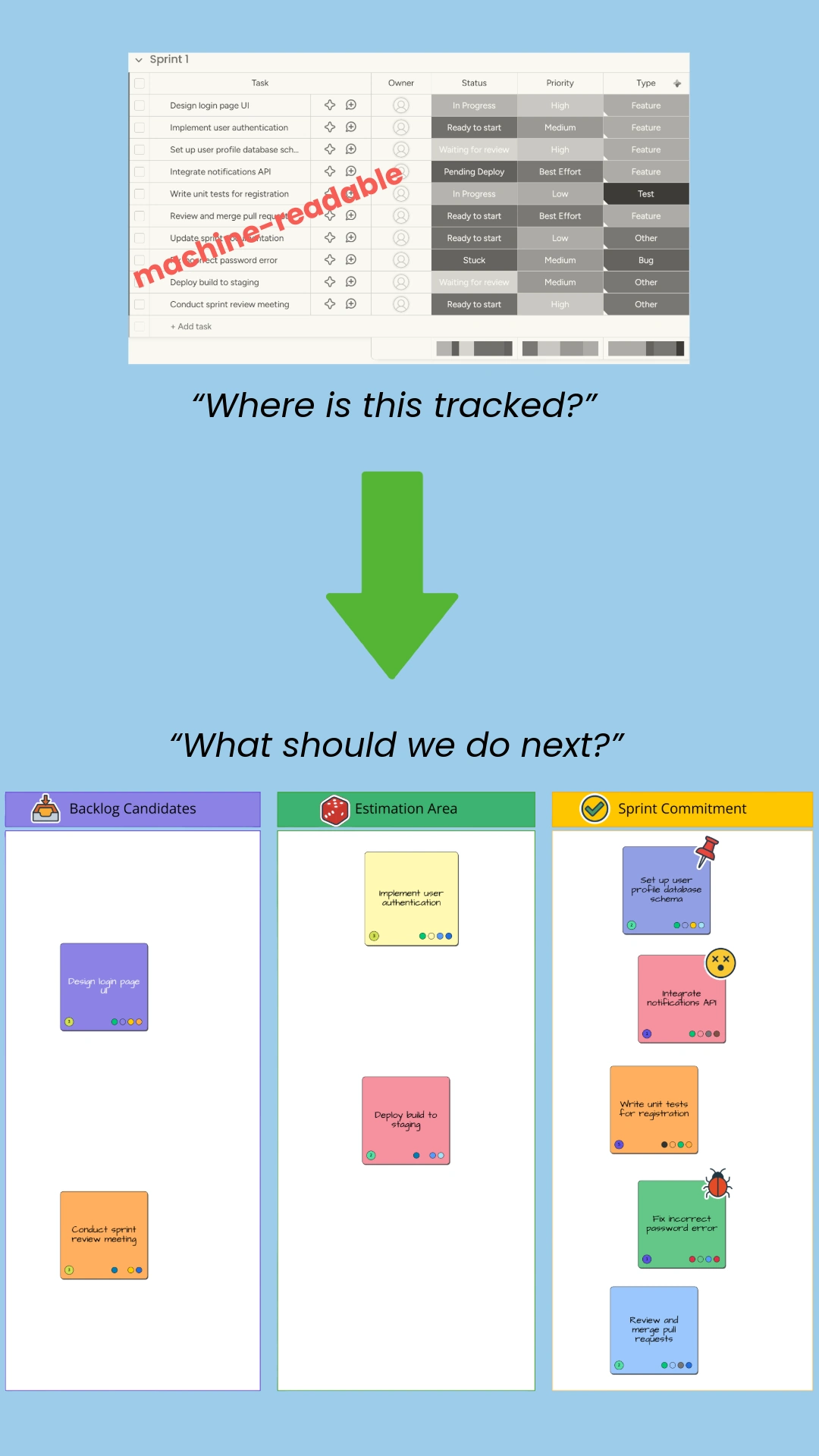
We call this space MeetVista — a visual collaboration layer that sits above your existing project boards, helping teams think, discuss, and align the way humans naturally do.
In MeetVista:
– Relationships are clear at a glance.
– Dependencies are visually connected.
– Priorities are spatially emphasized, so focus feels intuitive.
– Conversations happen right beside the work, where context lives.
When work becomes visual, everything changes. Clarity replaces confusion. Alignment happens in real time. Decisions come faster — not because the data changed, but because the experience finally fits the way we think.
MeetVista turns information into shared understanding, where patterns, risks, and opportunities naturally emerge — shifting the question from “Where is this tracked?” to “What should we do next?”
Install MeetVista to move beyond machine-readable logic.
Experience collaboration that speaks human — clear, connected, and effortless.
Closing Reflection
If your team spends more time explaining the board than discussing decisions, something is misaligned.
If meetings feel like reading spreadsheets out loud, that’s not collaboration — that’s translation.
Tools should expand communication, not compress it. They should give clarity to conversation, not replace it. The best systems empower people to think, connect, and act together.
When teams finally see work the way humans naturally understand it, alignment isn’t scheduled — it emerges.
Work lives in boards.
Understanding lives in visuals.